Programme Overview
- Organised by University of Pisa
- Held in english
- Lasts in 1 year
- Credits 60 ECTS
- Organised into 9 modules
- Lectures from 11 of January to 17 of July
- Hybrid format both in campus (University of Pisa) and online
- Degree awarded: Master’s Degree in Artificial Intelligence for Archaeology and Cultural Heritage (official title)

MODULES

3D Modeling and Information Systems for Cultural Heritage
Credits: 4 ECTS
Workload: 24 hours (18 lectures • 6 practical sessions)
The module focuses on digital methods for the documentation, analysis, and management of archaeological heritage through 3D modeling and information systems. It covers techniques such as digital photogrammetry and 3D reconstruction, as well as approaches to structuring and integrating models within heritage information systems, including HBIM frameworks. The module also explores tools and methodologies for stratigraphic analysis and the semantic organization of archaeological data, supporting the interpretation and documentation of complex contexts.

Databases, Ontologies, and the Semantic Web
Credits: 6 ECTS
Workload: 36 hours (30 lectures • 6 practical sessions)
The module introduces the principles and technologies for structuring, managing, and querying cultural heritage data through relational and graph-based databases. It explores semantic approaches to data modeling, with focus on ontologies and standards such as CIDOC-CRM, and the use of query languages like SPARQL. The module also examines linked open data practices and their role in enabling interoperability, data integration, and the semantic enrichment of cultural heritage information.

GIS, Spatial Analysis, and Artificial Intelligence
Credits: 5 ECTS
Workload: 30 hours (24 lectures • 6 practical sessions)
This module explores advanced methods for the analysis and interpretation of spatial data in archaeology, with a focus on the integration of Geographic Information Systems and artificial intelligence. It examines techniques for spatial modeling and predictive analysis, including the application of geospatial machine learning to identify patterns, relationships, and trends in archaeological data. The module also addresses the use of GIS-based workflows to support data integration, visualization, and decision-making in research and heritage management contexts.

Introduction to Robotics for Archaeological Documentation and Monitoring
Credits: 3 ECTS
Workload: 18 hours
This introductory module provides an introduction to the use of ground and aerial robotic systems in archaeological contexts, focusing on their application in documentation, monitoring, and intervention activities. It examines the capabilities of robotic platforms such as drones and terrestrial systems for data acquisition, site inspection, and environmental monitoring. The module also addresses the integration of robotic technologies with digital workflows, including mapping, 3D reconstruction, and data collection in complex or inaccessible environments.
Statistical Methods for Archaeology
Credits: 4 ECTS
Workload: 24 hours (18 lectures • 6 practical sessions)
This module introduces statistical approaches for the analysis of archaeological data, covering both descriptive and inferential methods. It explores techniques such as regression analysis, clustering, and multivariate analysis, with a focus on identifying patterns, relationships, and variability within complex datasets. The module emphasizes the application of statistical reasoning to archaeological research questions, supporting data interpretation and quantitative decision-making.

Artificial Intelligence for Image and Text Processing, Large Language Models
Credits: 6 ECTS
Workload: 36 hours (30 lectures • 6 practical sessions)
This module introduces methods and tools in artificial intelligence for the analysis of visual and textual data in archaeology. It covers key techniques in computer vision for the classification and segmentation of images of artifacts and excavation documentation, as well as Natural Language Processing methods for the analysis of textual sources. The module also explores the use of Large Language Models for information extraction, automated summarization, and research support. Practical activities are included, based on case studies and archaeological datasets, to develop hands-on experience with AI-driven approaches.

Digital Archaeology and Artificial Intelligence for Cultural Heritage
Credits: 4 ECTS
Workload: 24 hours (18 lectures • 6 practical sessions)
This module provides a theoretical and methodological introduction to digital archaeology, focusing on the role of artificial intelligence in the study of cultural heritage. It examines how digital tools and AI techniques support the documentation, analysis, and interpretation of archaeological data, including the integration of diverse sources such as images, spatial data, and textual records. The module also addresses the use of computational approaches to enhance research workflows, improve data accessibility, and support the presentation and dissemination of archaeological knowledge.

Introduction to Artificial Intelligence and Machine Learning for Archaeology, with Python
Credits: 6 ECTS
Workload: 36 hours (30 lectures • 6 practical sessions)
The module provides a foundational introduction to artificial intelligence and machine learning, combining theoretical concepts with practical implementation in Python. It covers core topics such as supervised and unsupervised learning, neural networks, and data preparation and analysis, with a focus on their application to archaeological research. Through hands-on exercises, students develop skills in building, training, and evaluating models results using archaeological datasets.

Python Programming for Archaeology
Credits: 6 ECTS
Workload: 36 hours (30 lectures • 6 practical sessions)
This module introduces the fundamentals of Python programming with a focus on applications in archaeological research. It covers key concepts for data analysis, the management and manipulation of archaeological datasets, and the automation of research workflows. Through practical exercises, students develop skills in writing scripts and building reproducible processes to support data processing, analysis, and integration.
Faculty
The programme is taught by an interdisciplinary team of researchers from the University of Pisa and MAPPA Lab, combining expertise in archaeology, artificial intelligence, computer science, geospatial analysis, digital heritage, and data science.
Nevio
Dubbini
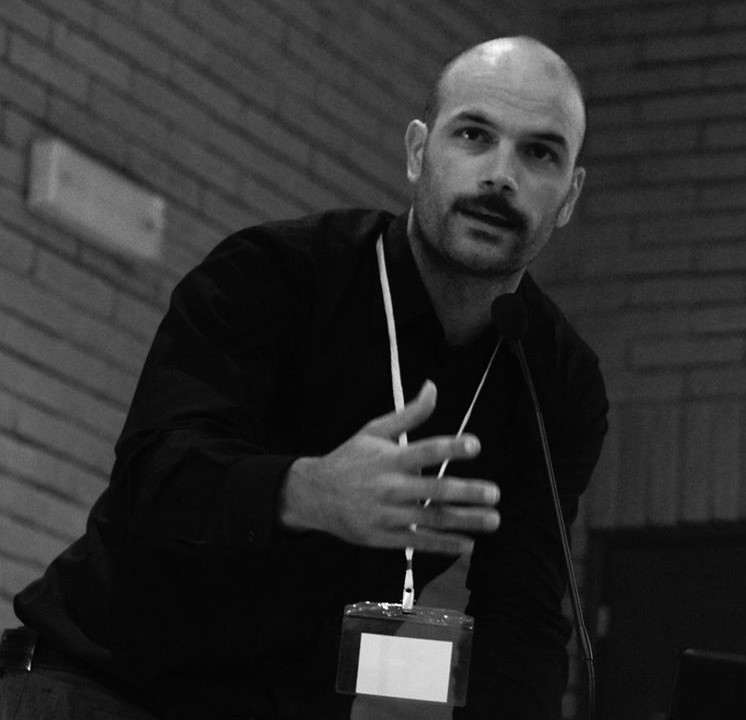
Nevio Dubbini is a Researcher in Archaeological Research Methods at the Department of Civilisations and Forms of Knowledge of the University of Pisa. With a PhD in Applied Mathematics, he works at the intersection of artificial intelligence, data science and archaeology, developing computational methods for the analysis, interpretation and management of complex cultural-heritage data. He is also the founder and CEO of Miningful, a data-science company specialising in predictive modelling and AI-based solutions.
His research focuses on machine learning, deep learning, statistical modelling, natural-language processing and network analysis applied to archaeological questions. His publications include studies of archaeological-potential mapping, predictive archaeology and preventive heritage management; PageRank- and GIS-based spatial models; spatio-temporal networks for tracing the circulation of Roman ceramics; and NLP methods for extracting structured information from archaeological texts.
More recent work investigates human-in-the-loop AI and computer-vision systems for processing archaeological legacy documentation and classifying artefacts. This includes the use of OCR, language models and NLP to extract knowledge from historical reports, as well as convolutional neural networks for the identification of animal bones in zooarchaeological collections. Through projects such as ARCHIVE, AUTOMATA and MAIA, he also contributes to discussions on the transparent, responsible and scientifically rigorous use of AI in archaeology.
His broader interdisciplinary experience includes applications of mathematical modelling and data analysis in robotics, biomedical imaging, rehabilitation, movement disorders and life sciences. Alongside his research, he teaches Artificial Intelligence in Archaeology and contributes to the Digital Archaeology course at the University of Pisa, helping students connect advanced computational techniques with archaeological interpretation and professional practice.
Gabriele
Gattiglia

Gabriele Gattiglia is an Associate Professor of Archaeological Research Methodology at the Department of Civilisations and Forms of Knowledge of the University of Pisa. His research lies at the intersection of digital archaeology, archaeological theory and contemporary archaeology, with particular emphasis on artificial intelligence, open data, GIS, predictive modelling and the critical use of computational methods.
He works at the MAPPA Lab, which manages MOD, the Italian repository for open archaeological data. His research examines how archaeological information can be collected, integrated, analysed and shared through transparent and reproducible digital workflows. Rather than treating digital technologies as neutral tools, he investigates their methodological, epistemological and ethical implications, including the biases and interpretative limits of AI-based systems. His publications also address archaeological data sharing, algorithmic archaeology and the relationship between technology, materiality and archaeological interpretation.
Gattiglia has coordinated several major national and European research initiatives. He led the ArchAIDE project, which developed an AI-assisted system for the automatic recognition of archaeological pottery, and contributed to MAPPA and MAGOH, devoted respectively to archaeological-potential modelling and sustainable heritage-data management. He currently coordinates the Horizon Europe project AUTOMATA, focused on the enriched digitisation and AI-supported classification of archaeological ceramics and lithics, and chairs the COST Action MAIA, a European network examining the scientific, ethical and operational use of artificial intelligence in archaeology.
A further strand of his work concerns contemporary landscapes, abandonment, marginality and environmental change. Through archaeological fieldwork in the Apuan Alps, Versilia, Lampedusa and other areas, he studies abandoned settlements, mountain communities, migration, local memories and the material traces of social and ecological transformation. Alongside his research, he teaches archaeological theory and methods, digital archaeology, archaeological research methodology and archaeology and new media. He is also active in promoting open science, free software and more participatory and socially engaged approaches to archaeological research.
Augusto
Palombini

Augusto Palombini is a Senior Researcher at the Institute of Heritage Science of the Italian National Research Council (CNR-ISPC). An archaeologist and writer, he works at the intersection of landscape archaeology, virtual heritage and digital communication, with a particular focus on the use of computational and multimedia technologies for the study and presentation of cultural heritage.
His research combines GIS, spatial modelling, topographic surveying, virtual and augmented reality, 3D environments and open-source tools. He has worked on ancient landscapes, palaeoenvironmental change and prehistoric communities in Italy and Africa, as well as on digital reconstructions and interactive platforms for archaeological research and public engagement.
A central strand of his work concerns virtual museums and digital storytelling. His publications explore how immersive environments, narrative design and artificial intelligence can improve the interpretation of archaeological sites, museum experiences and cultural tourism. He has contributed to projects on Paestum, the Tiber Valley, Isernia La Pineta and the archaeological landscapes of Sardinia.
Palombini also promotes open data, free software and accessible digital resources for archaeology. He is a founding member and vice-president of ArcheoFOSS and has served as scientific director of ArcheoVirtual, an international exhibition dedicated to virtual archaeology.
Giorgio
Grioli

Giorgio Grioli is a researcher at the Department of Information Engineering of the University of Pisa and a Visiting Scientist at the Italian Institute of Technology. His research focuses on the design, modelling and control of compliant and soft robotic systems, with particular emphasis on variable-impedance actuation and human-centred robotics.
His work combines mechanical design, control theory and bio-inspired engineering to develop robots that can interact safely and effectively with people and unstructured environments. His publications cover variable-stiffness actuators, adaptive robotic hands and feet, haptic technologies, human–machine interfaces, collaborative robots and upper-limb prostheses. Recent research includes controllable-stiffness prosthetic wrists and elbows, tactile feedback for prosthetic hands, adaptive feet for legged robots and assistive interfaces for people with motor impairments.
He received his PhD in Robotics, Automation and Bioengineering from the University of Pisa in 2011, with a dissertation on the identification and control of variable-impedance actuators. He has authored or co-authored more than 140 scientific publications in international journals and conference proceedings. He is also a co-inventor of several robotic devices and has contributed to the creation of robotics spin-off companies.
Alongside his research, he is active in university teaching, student and doctoral supervision, and the international robotics community. He has served in editorial roles for major robotics conferences and journals, including ICRA, ICORR, Actuators, Robotica and The International Journal of Robotics Research.
Salvatore
Basile

Salvatore Basile is a Research Fellow in Archaeology at the Department of Civilisations and Forms of Knowledge of the University of Pisa. His research focuses on landscape, Roman and environmental archaeology, with particular attention to the long-term relationships between human communities, settlement systems and changing environments.
He specialises in applying digital and quantitative methods to archaeological research, including Geographic Information Systems, spatial analysis, geostatistics, point-pattern analysis, logistic regression and computational modelling. Through these approaches, he investigates the formation and transformation of urban, rural, funerary and mountain landscapes, combining archaeological evidence with geomorphological, environmental and historical data.
A central area of his work is the archaeology of Roman and Late Antique Tuscany. His monograph Lucca Romana e Tardoantica reconstructs the development of Lucca and its territory from the foundation of the Roman colony to the Lombard period. His publications also examine the ancient river systems and settlement patterns of the Lucca plain, the funerary landscape of Late Antique and Early Medieval Lucca, and the Roman suburbs of Pisa. More recent collaborative research explores settlement and abandonment in the Versilia and Garfagnana mountains and the Apuan Alps, integrating archaeological, ethnographic and palaeoecological perspectives.
Alongside his research, he contributes to teaching in Digital Skills for Cultural Heritage at the University of Pisa. He is also interested in archaeological data management, open and reproducible research, and the quality and accessibility of environmental-archaeology datasets.
Filippo
Sala
Internships & Research Experiences
Within MAPPA Lab or partners, providing practical experience in:
- Artificial Intelligence for archaeology
- GIS and spatial analysis
- Computer vision
- 3D documentation
- Heritage databases
- Large Language Models
- Digital communication
- Research software development
Master’s Project
The programme concludes with an individual research project supervised by members of MAPPA Lab. Students apply the methods acquired during the course to a real archaeological or cultural heritage challenge, integrating AI techniques with archaeological research.
Ready to get started?
Applications for the 2026–2027 edition are now open.