
University of Pisa joins European Doctoral Network on premodern ceramic heritage
SOPHIA-DN, funded under the Marie Skłodowska-Curie Actions of Horizon Europe, will train 15 doctoral researchers at leading centres of archaeological science across Europe.
University of Pisa is a beneficiary in SOPHIA-DN, a new European Doctoral Network entitled “A Doctoral Training Network on the Study Of Premodern Ceramic Heritage: Integrating Experimental and AI-Enhanced Interdisciplinary Research “. The project is funded by the European Union under the Horizon Europe Marie Skłodowska-Curie Actions (MSCA) Doctoral Networks scheme, with an EU contribution of approximately €4.3 million over four years. It is coordinated by the University of Cyprus. University of Pisa is represented by Gabriele Gattiglia and Nevio Dubbini, who act as the Department of Civilisation and Forms of Knowledge scientific representatives in the project.
Ceramics are the most abundant and informative category of material heritage from the past. SOPHIA-DN uses them to investigate how craft traditions emerged, evolved and connected communities across the ancient world. Its name draws on the Greek word sophia (wisdom), referring to the tacit, intergenerational knowledge that potters built up over centuries of observation, practice and experience. The network brings together archaeometric analysis, experimental archaeology, archaeological interpretation and artificial intelligence.
SOPHIA-DN unites 20 organisations: eight beneficiaries in six EU Member States and twelve associated partners, including universities, research institutes, heritage authorities, a pottery studio and a technology company. The beneficiaries are the University of Cyprus (coordinator), The Cyprus Institute, the University of Padua (Italy), the University of Patras (Greece), the University of Santiago de Compostela (Spain), University College Dublin (Ireland), the French National Centre for Scientific Research (CNRS, France) and the University of Pisa (Italy). The research spans from the Neolithic to the post-medieval period, with case studies from Cyprus, Greece, Italy, France, Germany, Ireland and the Czech Republic to Morocco, West Africa, the Horn of Africa, and the Gulf.
University of Pisa will host 1 of the network’s 15 doctoral candidates at the MAPPA Lab, Department of Civilisation and Forms of Knowledge. Under the supervision of Gabriele Gattiglia and Nevio Dubbini, the doctoral candidate will investigate how artificial intelligence and computer vision can be used to recognise, classify and compare decorative patterns in painted and incised pottery from ancient Cyprus. By integrating archaeological and technological data with AI-driven pattern recognition, the research aims to identify stylistic traditions, workshop signatures and individual craftsperson hands, tracing cultural connections, knowledge transmission and innovation across different periods and regions. The doctoral candidate will be co-supervised by experts from different disciplines, undertake research secondments to other partner institutions and take part in the network’s shared training programme.
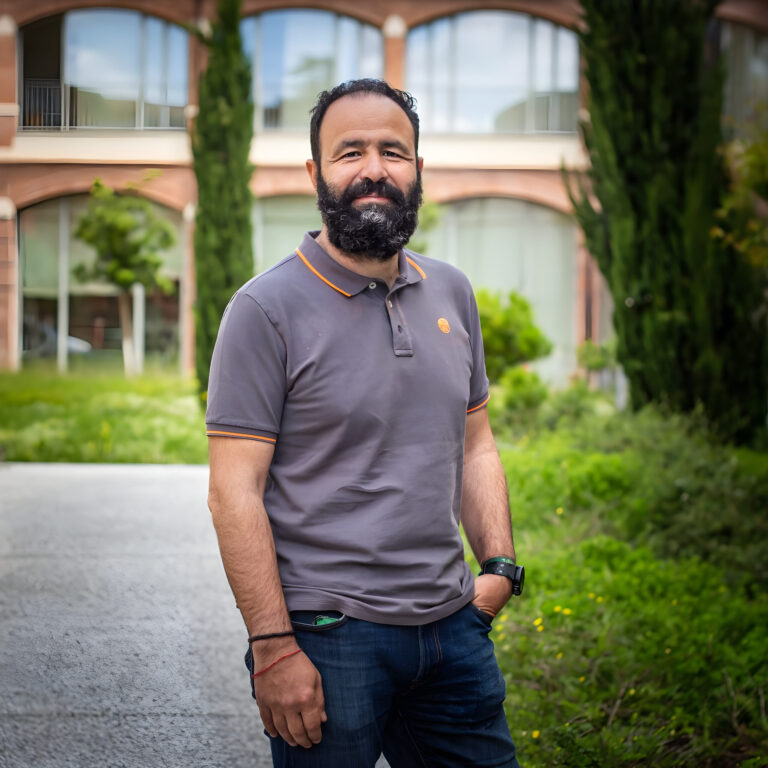
“SOPHIA-DN represents an important opportunity to strengthen the integration of AI and archaeological research within an international and interdisciplinary framework,” says Gabriele Gattiglia, scientific lead of the University of Pisa team. “Our contribution builds on the expertise of the MAPPA Lab in digital archaeology, with the aim of developing innovative approaches that connect archaeological interpretation with computational methods, while training a new generation of researchers equipped to address complex questions about the past.”

“By applying machine learning and computer vision to decorated pottery, we aim to identify patterns and relationships that may be difficult to recognise through traditional approaches alone,” adds Nevio Dubbini, member of the University of Pisa research team. “This research will allow us to explore stylistic similarities, workshop traditions and the transmission of craft knowledge across time and space, demonstrating how AI can open new perspectives on archaeological heritage.”
SOPHIA-DN officially starts on 1 March 2027. Doctoral candidates will be recruited between September and November 2027, in line with each host institution’s admission procedures. Vacancies will be advertised internationally on EURAXESS and on the websites and social media channels of the project and its beneficiaries, and will be filled through an open, transparent and merit-based process.
About the Marie Skłodowska-Curie Actions
The Marie Skłodowska-Curie Actions are the European Union’s flagship programme for doctoral education and postdoctoral training. MSCA Doctoral Networks fund partnerships of universities, research organisations and other sectors. They train doctoral candidates through international, interdisciplinary and intersectoral mobility. SOPHIA-DN is funded by the European Union under grant agreement No 101312286 (call HORIZON-MSCA-2025-DN-01).